Forklift Course: No more manual labor. Become highly sought-after in the logistics sector
Could a few hours of practical training open the door to a steadier career? Moore Norman Technology Center helps beginners add a valuable skill to a résumé in a short time. Its forklift training may often be completed within a few hours, giving new workers a clear place to get started.
This path can help people without a degree or years of experience move toward a specialized logistics job. A trained operator can support warehouse teams, distribution centers, and shipping sites. The Bureau of Labor Statistics reported an average hourly rate of $22 in 2024, offering a useful benchmark when comparing jobs and planning for stability.
Safety remains central. OSHA rules require employers to provide proper training and certification for powered industrial trucks. A license alone does not prove skill; employers want workers who understand safe practices and can apply them on site.
This guide explains what to expect, how to compare providers, and where to find employers. It also shares practical steps for building skills and finding work in the United States. Explore this advice on finding certified operator jobs, then take the first step toward a stronger career path.
Forklift Course: No more manual labor. Become highly sought-after
A short credential can connect beginners with practical work in a growing field. Forklift operators help warehouses, distribution centers, and manufacturing sites move products with speed and care. Demand also reaches construction, retail, recycling, agriculture, logistics, and food processing.
Moore Norman Technology Center says its forklift training may finish within a few hours. This quick format helps workers gain useful skills without a long school schedule. Training also shows safety awareness, focus, and responsibility.
The Bureau of Labor Statistics reported an average rate of $22 per hour for this work in 2024. Pay varies by location, experience, and company, so applicants should review each job posting. Delaney Cook’s January 22, 2026 guide also presents this field as a route into warehouse and light manufacturing jobs.
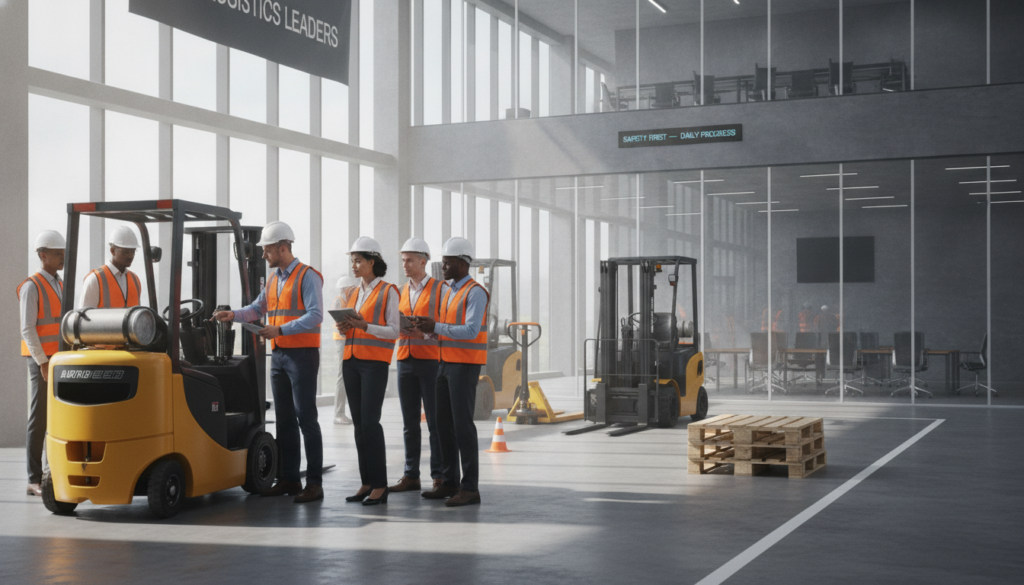
Why Operators Are in Demand Across the United States
Many employers need certified operators who can handle inventory safely and accurately. These roles give companies ways to build reliable teams as shipping needs expand.
How Certification Can Help You Get Hired Faster
Documented certification can strengthen a résumé and support a faster job search. Explore certification options to compare training steps and prepare for local jobs.
What a Forklift Operator Does on the Job
Before enrolling in training, beginners should understand the daily routine. A forklift operator supports shipping, storage, and production teams. The job combines vehicle control, careful planning, and steady communication.

Daily Duties in Warehouses, Distribution Centers, and Manufacturing
Operators keep products moving through warehouses, distribution centers, and manufacturing sites. Their shift may include loading and unloading trucks, stacking pallets, moving inventory, and using pallet jacks. They also inspect equipment, clear obstructions, record product details, and report concerns to supervisors.
Check tires, forks, controls, and warning devices before use.
Move loads at a safe speed and keep travel paths clear.
Coordinate with drivers, supervisors, and nearby employees.
Physical Requirements, Communication Skills, and Workplace Expectations
This active work can involve lifting, bending, squatting, kneeling, and reaching from awkward positions. Facilities may feel hot or cold, so suitable clothing and personal protective equipment matter. Workers often stay active for the full shift.
Strong safety habits support every task. Clear English, depth perception, eye-hand coordination, teamwork, punctuality, and attention to detail help protect people and products. Review how to become an operator to understand hiring expectations.
Understanding OSHA Forklift Certification Requirements
OSHA compliance gives each workplace a clear safety framework. Federal powered industrial truck rules appear in 29 CFR 1910.178, 1926.602, and 1915.20. State plans may set stricter standards, so workers should check local rules and ask employers about site-specific training.
Why Employers Must Train and Evaluate Operators
A forklift operator must complete training and receive employer approval before using a truck at work. A third-party certificate can show completed instruction, but it does not grant permission to operate equipment. The company must assess the employee’s skills, workplace hazards, and truck type.
Certification Records, Employer Approval, and the Three-Year Evaluation Cycle
Employers must evaluate operators at least every three years. Records should list the training date, provider, evaluation date, and evaluator’s name. A previous company’s certification does not transfer because each workplace has different equipment, traffic patterns, and written safety procedures. OSHA does not require a personal driver’s license.
When Refresher Training Is Required
Refresher training becomes necessary after an accident, near miss, unsafe operation, or assignment to a different truck type. This process protects employees and supports workplace safety. Read this OSHA certification guide for added compliance details.
What You Will Learn in a Forklift Training Course
A complete program turns basic interest into practical workplace skills. Beginners learn how equipment works, how loads shift, and how careful choices support workplace safety. This training also prepares each forklift operator for site rules, employer evaluation, and certification.
Equipment Inspection, Controls, Loads, and Stability
Before each shift, trainees inspect lights, tires, hoses, mirrors, fluid levels, filters, forks, the mast, controls, and warning systems. They also study the stability triangle, center of gravity, hydraulic systems, load limits, and tipping risks. These lessons help operators spot defects before work begins.
Overturns cause 22% of related deaths; struck-by events cause 20%.
Crushing incidents account for 16%, while falls account for 9%.
Safe skills include balance checks, controlled turns, and clear communication.
Safe Loading, Unloading, Stacking, and Driving Practices
Practical forklift training covers slow approaches, full stops, set brakes, overhead clearance, balanced forks, and secure loads. Learners practice loading unloading, stacking, and moving near pedestrians. They also travel slowly on ramps, keep safe edge distances, and position the load uphill. This hands-on training builds confidence for a real job while helping employees follow safety standards.
How to Choose the Right Forklift Training Program
Choosing a provider takes more than checking the price. The right forklift training combines clear lessons, live practice, and a documented training evaluation. This format helps an operator build skills that fit a real job.
Comparing Forklift Instruction, Practice, and Evaluations
Compare the National Safety Council’s one-day forklift training with local options. NSC delivers its program at an NSC training center or a business location. Ask about class size, schedule, equipment access, and total time.
OSHA requires records of formal instruction and practical performance evaluation. Confirm that current materials follow OSHA, ANSI, and manufacturer guidance. A qualified trainer must have the knowledge, training, and experience to assess employees.
Choose practice with the same forklift types used by the company.
Check whether evaluations reflect local traffic patterns and hazards.
Ask how the provider supports safety in varied work environments.
The strongest program connects classroom learning to realistic tasks. That preparation helps new workers enter employment with useful certification and sound judgment.
Where Forklift Certification Can Lead Your Career
A safety credential can open doors in several US industries. It gives beginners a practical way to test different settings. The Bureau of Labor Statistics reported a $22 average hourly rate in 2024. Treat that figure as a national reference; location, shift, and experience shape actual pay.
Forklift training can prepare certified forklift operators for roles in logistics, shipping, construction, demolition, retail distribution, manufacturing, recycling, waste management, agriculture, and food processing.
Training supports safe equipment use in busy distribution centers.
Forklift operators can find work with construction and recycling teams.
Food and agriculture sites value dependable workers with practical skills.
Pathways Toward Supervision and Safety Roles
Reliable work with forklifts could lead to inventory specialist, warehouse supervisor, or safety trainer roles. Employers notice employees who protect people, track stock, and communicate well. These skills transfer across a company and each workplace.
Delaney Cook’s January 22, 2026 guide links warehouse and light manufacturing jobs with longer-term pathways. A temporary assignment can become a permanent job when workers show steady performance and safety awareness. Explore how to become a forklift operator for practical next steps and additional training.
How to Start Your Forklift Career Right Now
Set a simple plan today: choose a provider, review local openings, and prepare a clear résumé. This approach helps new workers get started with confidence and use their time well.
Finding Training Providers, Employers, and Local Job Openings
Compare Moore Norman Technology Center with the National Safety Council. Ask about class times, truck types, hands-on practice, and employer rules. Some employers offer on-site training certification, while others expect prior forklift certification or a forklift license.
Search Indeed.com for nearby jobs. Contact Labor Finders to learn about local assignments, weekly pay, and longer-term company connections. Many employers value reliable workers who can support manufacturing and warehouse teams. You can also review jobs without experience.
Building a Resume That Highlights Safety and Equipment Skills
List truck types, pre-shift inspections, loading unloading, inventory movement, PPE use, communication, and documented training. Mention relevant skills, employer evaluations, and training dates. Ask when operators need refreshers; continued evaluation occurs at least every three years before employees operate a forklift at a new workplace.
Confirm the provider and training format.
Apply through Indeed and Labor Finders.
Show safety health awareness and equipment skills.
Conclusion
A practical start can lead to steady work in the United States. A focused course helps a new forklift operator build skills for logistics, warehousing, manufacturing, or construction, even without a degree or long experience.
OSHA compliance rests on employer-led training, hands-on evaluation, clear records, and safe performance. A personal license does not replace site approval. Inspection, load handling, communication, and hazard awareness help protect the worker, employees, equipment, and the company.
Compare providers, ask employers about openings, search Indeed.com, and list your certification clearly on a résumé. Good forklift training can support a first job and a reliable path ahead. Consistent safety habits and dependable work can turn an entry-level role into lasting career growth.
FAQ
What does a forklift certification cover?
It covers equipment inspection, controls, load stability, safe driving, and workplace safety. Training also includes a written lesson, hands-on practice, and an evaluation.
Is a forklift license required in the United States?
OSHA requires employers to train and evaluate workers who use powered industrial trucks. The company must approve each certified operator before work begins.
How often must operators complete an evaluation?
Employers must evaluate each operator at least every three years. The record should show the date, trainer, equipment type, and employee approval.
When is refresher training needed?
Refresher training may follow an accident, unsafe operation, a new truck type, a workplace change, or a failed evaluation. Employers can also assign it when skills need review.
What skills are taught during training?
Workers learn pre-use inspections, steering, braking, load handling, stacking, loading, unloading, and safe travel. Lessons also address visibility, pedestrian traffic, and stability.
Can certification help with job searches?
Yes. Many employers in logistics, manufacturing, retail, construction, and food processing prefer trained operators. Add your training date, equipment skills, and safety record to your resume.
Where can certified operators find work?
Common workplaces include warehouses, distribution centers, shipping yards, production plants, grocery facilities, and building supply companies. Local staffing agencies can also connect workers with open jobs.
Does certification transfer between companies?
Training records may support a job change, but each employer must verify skills and approve the operator. A new workplace may require site-specific instruction or an additional evaluation.
What should I look for in a training provider?
Choose a provider with qualified instructors, current OSHA-based lessons, hands-on equipment practice, and a documented training evaluation. Ask whether the program covers the truck types used in your target workplace.